


Why Temperature Validation Matters in Regulated Environments
Temperature-controlled equipment plays a critical role across pharmaceutical, biotechnology, healthcare, medical device production, and research environments. Whether storing temperature-sensitive materials in a refrigerator, protecting biological samples in a freezer, maintaining product stability in an environmental chamber, or validating sterilization cycles in an autoclave, organizations must demonstrate that equipment consistently performs within required specifications. Even minor temperature variations can affect product quality, compromise research outcomes, or create compliance concerns.
As a result, temperature validation has become an essential process for engineers, validation specialists, and quality teams responsible for maintaining reliable and compliant operations. Some organizations run validation studies with in-house engineers, preferring to manage the equipment, schedule, and raw data. Others prefer a fully managed study executed by external specialists. Transcat supports both; the following guide focuses on equipment available for in-house teams building or running their own validation studies.
The Challenges of Temperature Validation and Qualification
Temperature validation involves far more than verifying a displayed target temperature. Refrigerators, freezers, autoclaves, incubators, stability chambers, and environmental chambers often exhibit temperature differences throughout the equipment due to airflow patterns, loading conditions, equipment design, and operating cycles. To fully understand performance, validation teams must identify hot and cold spots, verify temperature uniformity, and ensure that critical processes consistently operate within acceptable limits.
These challenges become even more significant in pharmaceutical, biotechnology, and food processing environments, where regulatory expectations, product safety, and data integrity are closely linked.
Without proper temperature validation and mapping, organizations may struggle to demonstrate equipment performance during audits, investigate quality events, or confirm that products were maintained under required storage and process conditions.
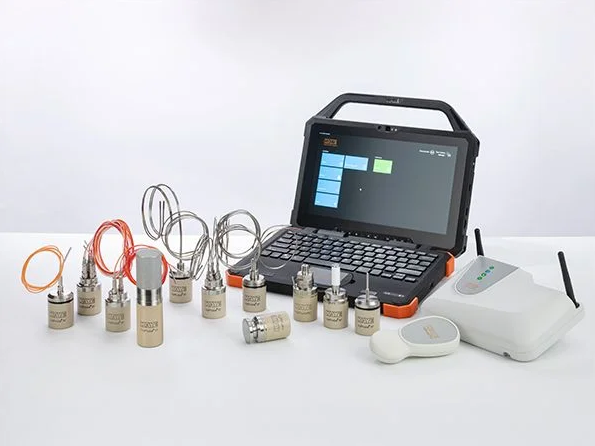
Choosing the Right Temperature Validation System
Not all temperature validation projects have the same objectives, which is why validation equipment is chosen based on study complexity, monitoring requirements, regulatory expectations, and available resources. Rather than focusing on individual instruments, many facilities build their validation programs around one of three proven temperature validation systems: The MadgeTech Temperature Validation System, the Kaye Validator AVS System, and the Kaye ValProbe RT System. Each offers a unique combination of capabilities that can be adapted to a wide range of validation and mapping applications.
Looking first at the MadgeTech Temperature Validation system, which is a highly versatile approach to temperature mapping and qualification. Using HiTemp series data loggers, multiple probe configurations, and supporting rugged Console pre-loaded with software, the system can be adapted for refrigerator mapping, freezer validation, warehouse monitoring, environmental chamber qualification, and a variety of other temperature studies. One of the platform's greatest strengths is its adaptability, allowing users to select probes that best fit the application like the HITEMP140-FR for fast response, precise data logging in harsh environments or the HITEMP140-PT for extended high-temperature measuring (probe dependent). While MadgeTech does not provide real-time monitoring functionality, it offers a dependable and economical solution for routine mapping projects, qualification studies, and ongoing monitoring requirements.
The Kaye Validator AVS System is a comprehensive thermocouple-based validation platform designed for demanding qualification and process validation activities. Built around the Validator AVS, IRTD400, LTR-90, and a range of Type T, J, K, and other thermocouples, the system provides exceptional flexibility when validating autoclaves, depyrogenation ovens, sterilizers, environmental chambers, and other critical process equipment. Because the platform can support many measurement points simultaneously, validation teams can perform detailed thermal mapping studies and generate extensive datasets often required for Installation Qualification (IQ), Operational Qualification (OQ), and Performance Qualification (PQ) activities. Its versatility makes it a preferred solution for facilities conducting complex validation projects across multiple applications.
The Kaye ValProbe RT (Real-Time) system approaches validation from a different perspective by utilizing wireless data loggers with diverse antennas connected to a base station and console with real-time monitoring capabilities. Other thermocouple-based systems also support real-time temperature monitoring; however, the ValProbe RT measures temperature plus additional parameters such as pressure and relative humidity. This expanded measurement capability, combined with real-time visibility via datalogger/probes like the ValProbe Cryo Logger can significantly improve troubleshooting efficiency and provide greater confidence during critical qualification activities. The platform's flexibility allows it to be deployed in steam sterilizers, dry heat sterilizers, freezers, incubators, stability chambers, and other temperature-controlled environments, making it an effective solution for organizations seeking a streamlined validation workflow and immediate access to data.
How Temperature Validation Supports Compliance Efforts
While the primary goal of temperature validation is ensuring product quality and process performance, compliance remains a critical consideration for many regulated facilities. Pharmaceuticals, biotechnology, food processing, and healthcare facilities must maintain accurate and traceable records while demonstrating that critical equipment has been properly qualified and validated.
Requirements such as 21 CFR Part 11 compliance place additional emphasis on secure electronic records, audit trails, and data integrity. Effective temperature validation systems help organizations collect reliable data, generate comprehensive reports, and maintain documentation that can withstand regulatory scrutiny.
These systems generate the raw temperature data that regulators expect to see, including timestamped readings, audit-ready exports, and 21CFR Part 11-capable logging. Turning that data into defensible validation reports still requires a written protocol, defined acceptance criteria, and a qualified reviewer, whether that’s your internal quality team or a validation partner.
Renting Temperature Validation Equipment vs. Owning: Why Renting Makes Sense
For in-house validation teams, many temperature mapping and qualification projects occur periodically rather than continuously, making buying equipment difficult to justify financially. Renting temperature validation systems from Transcat | Axiom Rentals provides access to industry-leading technology without the capital investment required to purchase specialized equipment.
Renting offers immediate availability when validation projects arise, allowing teams to stay on schedule. In addition, we offer product selection support, ensuring you select the most appropriate validation system based on your unique requirements.
Choosing How to Run Your Validation Program
If your team has the bandwidth and expertise to execute internally, renting a Kaye Validator AVS, ValProbe RT, or MadgeTech system gives you industry-leading equipment without the capital cost – and our rental specialists can help you match the system to your application.
If you’d rather hand the protocol, execution, and reporting to a dedicated team, the Transcat Validation team can perform full temperature mapping and validation services for regulated facilities across all industries. Not sure which fits your project? Contact us and we’ll help you find the right path.
The Essentials: Find the Right Rental Partner for Validation Equipment
Effective temperature validation is essential for maintaining product quality, protecting sensitive materials, and ensuring reliable performance across a range of temperature-controlled environments. As facilities work to strengthen quality programs and support regulatory requirements, selecting the appropriate validation equipment becomes an important step towards achieving accurate, defensible, and actionable results.
The Kaye Validator AVS, Kaye ValProbe RT, and MadgeTech Temperature Validation systems each offer distinct advantages that can be tailored to specific validation objectives. By understanding the capabilities of each of these versatile systems and matching them to project requirements, validation teams can improve efficiency, enhance data quality, and support long-term operational success.
Contact the knowledgeable rental team at Transcat | Axiom Rentals to discuss your temperature validation equipment needs, compare validation systems, and identify the solution that best fits your requirements. Reach us at (800)264-4059 or [email protected], or browse our rental equipment online at transcat.com/validation-systems-rental.